The Self-Storage Auction Process: A Step-by-Step Guide for Owners
Management Software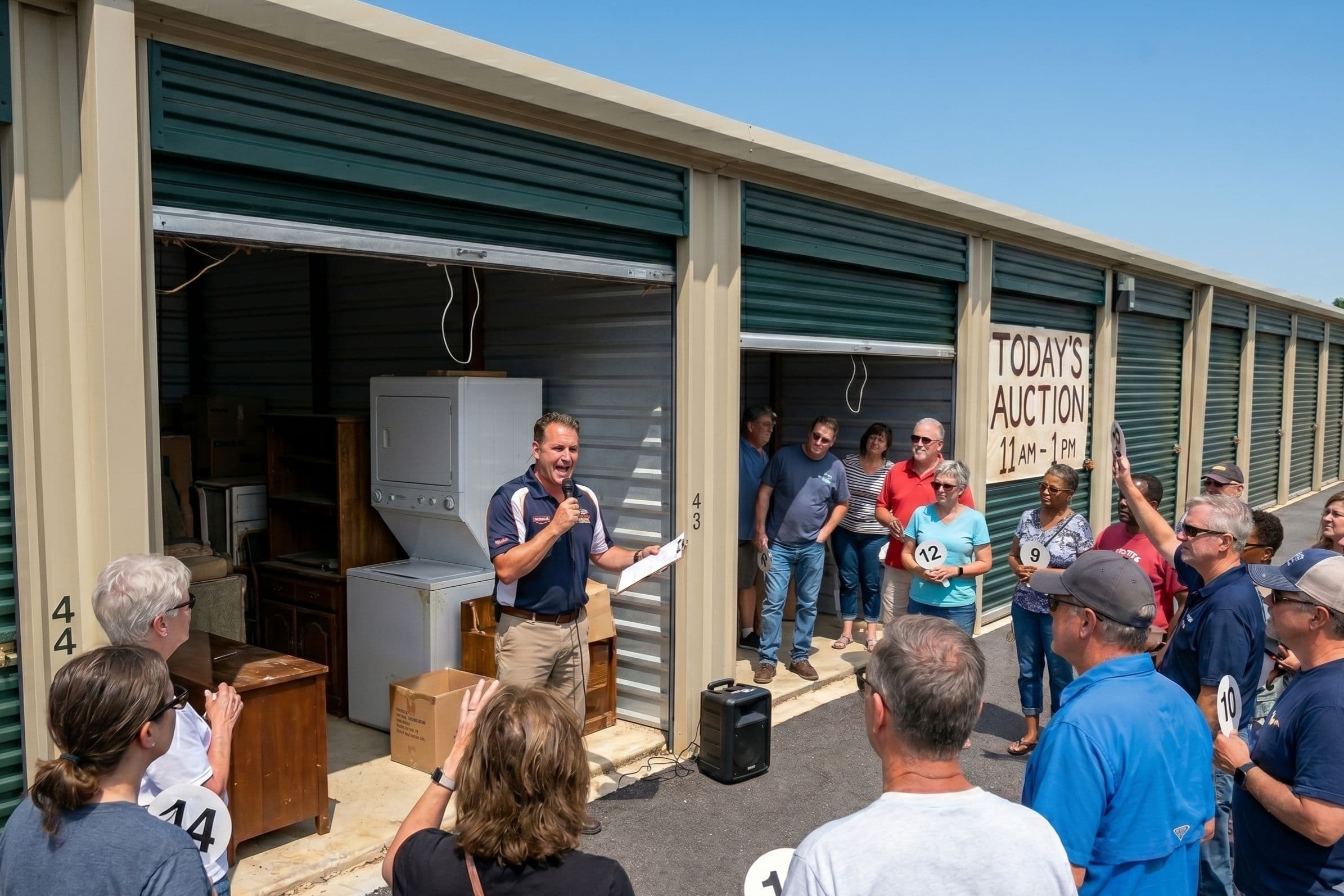
Every self-storage operator eventually runs into it. A tenant stops paying. Weeks of unanswered emails and unreturned calls go by, and you're left holding a unit full of somebody else's stuff and a balance you might never collect. That's where the self-storage lien sale, or as most operators just call it, "the auction," comes in.
The auction process is built on each state's self-storage lien laws. Those laws give a facility owner the legal right to sell the contents of a delinquent unit and apply the proceeds to the unpaid rent. The laws are detailed, though, and they vary state to state. Miss a step or blow a deadline and you can lose the right to sell, owe the tenant damages, or both.
In a market this big, small differences in how you handle delinquencies and auctions add up to real dollars over the course of a year. This guide is the playbook every first time operator should have on day one.
1. Why Auctions Exist: Storage Liens 101
When a tenant signs a self-storage rental agreement, they're usually granting the facility a lien on the contents of their unit. That lien is what gives you, the operator, the legal right to sell the contents if the tenant defaults. Every U.S. state has a self-storage lien statute laying out exactly how and when that right can be used.
The lien is your security interest. The auction is how you convert that security interest into cash. Until the unit is properly sold under the lien process, you cannot legally:
- Move or dispose of the tenant's belongings
- Lease the unit to a new tenant
- Use any items inside the unit for your own purposes
- Refuse to return the items if the tenant cures the default
The Self-Storage Association (SSA) maintains a state by state summary of these lien laws, and most state SSA chapters publish operator-friendly compliance guides. Bookmark the one for your state. It will be the reference you reach for the most.
2. Before You Auction: The Pre-Lien Period
Most successful auctions start long before the auction itself. The pre-lien period is the stretch between a missed payment and the formal start of the lien process, and it's your best shot at recovering rent without ever having to sell anything.
A Standard Delinquency Timeline
Exact timelines vary by state and by your rental agreement. A typical sequence looks like this:
- Day 1: Rent is due. Most agreements include a short grace period (often 5 days).
- Days 6–10: Late fee assessed. First reminder sent by email and SMS.
- Days 11–20: Access to the unit is restricted (gate code disabled, overlock applied to the door).
- Days 21–30: Pre-lien notice sent. The tenant is formally warned that lien proceedings will begin.
- Day 30+ (varies by state): Formal lien notice issued. The countdown to auction officially starts.
The most common operator mistake at this stage is waiting too long to overlock and to send the formal notice. The longer the unit sits in pre-lien limbo, the less likely you are to recover the rent. You also have more square footage tied up in a unit that isn't paying you.
3. Step-by-Step: The Formal Lien Sale Process
Once a tenant crosses the threshold defined by your state's lien statute, the formal sale process kicks in. The exact requirements vary, but the structure is consistent across nearly every state.
Step 1: Verify the Default
Before you start the lien process, confirm the tenant has actually defaulted under the rental agreement and that no payment, partial payment, or payment plan was accepted that would reset the clock. Accepting even a small partial payment can, in many states, restart the lien timeline from scratch.
Step 2: Send the Pre-Lien / Default Notice
Most states require an initial default notice, sent by certified mail or verified email (or both), depending on what your rental agreement specified. The notice typically has to include:
- The amount owed and a breakdown of charges
- The date by which payment must be made to avoid sale
- A statement that the contents of the unit will be sold if the default is not cured
- The facility's contact information
Step 3: Inventory the Unit
Many state statutes require an inventory before sale, and best practice recommends one even when the law doesn't. Open the unit, photograph the contents from multiple angles, and document anything that might affect the sale: visible firearms, ID documents, vehicle titles, hazardous materials, or what look like personal records.
If you find a firearm, federal documents, or anything of life or death importance like medication, stop and call your attorney before you go any further.
Step 4: Publish the Notice of Sale
Most states require public notice of the auction. The traditional requirement was a printed notice in a local newspaper of general circulation, but most states have updated their statutes to allow notice on a recognized online auction platform like StorageTreasures or Lockerfox.
Check your state's statute for the exact requirements. Common ones include:
- Publication a specific number of days before the sale (often 7–14 days)
- Two consecutive publications in some states
- Specific information that must appear in the notice (tenant name, unit number, sale date, time, location)
Step 5: Hold the Sale
The sale has to be conducted in a "commercially reasonable manner." That phrase shows up in most state lien statutes. In plain language, you actually have to try to get a fair price. Selling a unit to your cousin for $5 because you didn't feel like running a real auction is not commercially reasonable.
4. Online Auctions vs. In-Person Auctions
Twenty years ago, every storage auction looked roughly the same. A small group of regulars showed up at the facility. The manager cut the lock. Bidders peered into the unit for two minutes and placed their bids. Today, the vast majority of self-storage auctions happen online.
Online Auction Platforms
The dominant platforms are:
- StorageTreasures. The largest online auction platform, owned by Storable.
- Lockerfox. Popular with smaller and mid-size operators.
- iBid4Storage. Strong in certain regional markets.
- StorageAuctions.com. An established player with a large bidder base.
Why Online Has Won
- Bidder pool: Online auctions pull hundreds of registered bidders instead of the half dozen locals who show up to an in-person sale.
- Higher proceeds: A larger bidder pool generally produces higher final bids and a better recovery on the unpaid rent.
- Operator time: You list once, the platform runs the bidding for several days, and the winning bidder coordinates pickup. No Saturday morning auctions to staff.
- Compliance: The platforms automate notice publication and produce a clean audit trail of bids and payment.
For most operators, the only reason to run an in-person auction these days is when the unit contains a vehicle that requires a title transfer, or when state law specifically requires it.
5. After the Sale: Disbursement of Proceeds
The sale is over and the winning bidder has paid. Now you have one last obligation that operators get wrong all the time: handling the money correctly. This is where a lot of facilities accidentally violate the lien statute.
The Standard Order of Distribution
- Outstanding rent and lien charges. Your unpaid rent, late fees, and the actual costs of conducting the sale come off the top.
- Other liens. If another party has a recorded lien against the goods (rare, but it happens with certain stored items), they may have a claim.
- Excess proceeds to the tenant. Anything left over belongs to the tenant. You are required to attempt to deliver the excess proceeds back to the defaulted tenant.
- Unclaimed property. If you cannot reach the tenant after a statutory waiting period, most states require you to remit the excess proceeds to the state's unclaimed property office.
Pocketing excess proceeds, even by accident (by leaving them in the operating account, for example), is one of the fastest ways to get sued by a former tenant. Track every auction's accounting separately.
6. Common Auction Mistakes (and How to Avoid Them)
The same handful of auction mistakes show up over and over across the industry. Avoiding them is mostly a matter of having a written process and actually following it.
Mistake 1: Improper Notice
The number one reason an auction gets challenged is the tenant claiming they were never properly notified. Always send notices by the method spelled out in your state statute and your rental agreement. Keep delivery confirmations. Document the date of every contact attempt.
Mistake 2: Accepting Partial Payment Mid-Process
A tenant sends in $50 toward a $700 balance the day before the auction. In most states, accepting that payment voids the lien process and forces you to start over. Either reject partial payments outright, or check with your attorney before accepting any payment once the lien process has started.
Mistake 3: Selling Items That Shouldn't Be Sold
Items that can't legally be sold at a storage auction commonly include firearms, prescription medications, and certain vehicles without a title. If you find any of these during inventory, set them aside and check your state statute or your attorney before going further.
Mistake 4: Skipping Insurance and Documentation
Photograph the unit before, during, and after the sale. Document who removed the items and when. If a winning bidder later claims something was missing or damaged, your photos and chain of custody log are the only thing standing between you and a claim.
Mistake 5: Mishandling Excess Proceeds
Treat excess proceeds as money you are legally holding, not money you have earned. Set up a separate accounting category and follow your state's procedure for returning the excess to the tenant or remitting it to the state's unclaimed property office.
7. Software That Streamlines the Auction Process
Modern storage management software has automated most of what used to be a paper driven nightmare. The best platforms now handle:
- Automated delinquency tracking. Flagging units as they cross each stage of the lien timeline.
- Notice generation. Producing pre-lien and lien notices that comply with your state's statute.
- Certified mail and email logging. Tracking every required communication with timestamps.
- Auction platform integration. Listing eligible units directly on StorageTreasures or Lockerfox without re-keying data.
- Excess proceeds accounting. Segregating tenant funds and reminding you when unclaimed property remittance is due.
If you're still managing delinquencies on a spreadsheet, this is one of the highest ROI areas to upgrade. A single properly noticed auction recovers more than a year of software fees for most facilities.
8. Final Word: Treat Auctions as Compliance, Not Cleanup
Storage auctions are part of the job. Not anyone's favorite part. Not the most profitable part either, since most operators recover only a fraction of the unpaid rent through the auction itself. What auctions do reliably accomplish is closing out a delinquent account legally and getting the unit back so it can earn rent again.
Approach the process as compliance, not cleanup. Follow your state statute. Document everything. Use software that automates the timeline. Keep excess proceeds segregated. Operators who run their auctions this way almost never end up on the wrong side of a lawsuit. Operators who improvise eventually do.
If you're not sure whether your current process is compliant, the safest first step is a 30 minute call with a self-storage attorney in your state. The cost of that call is trivial compared to the cost of getting one auction wrong.
Looking for Management Software vendors?
Browse our directory of trusted management software providers for storage facilities.
View Management Software Vendors